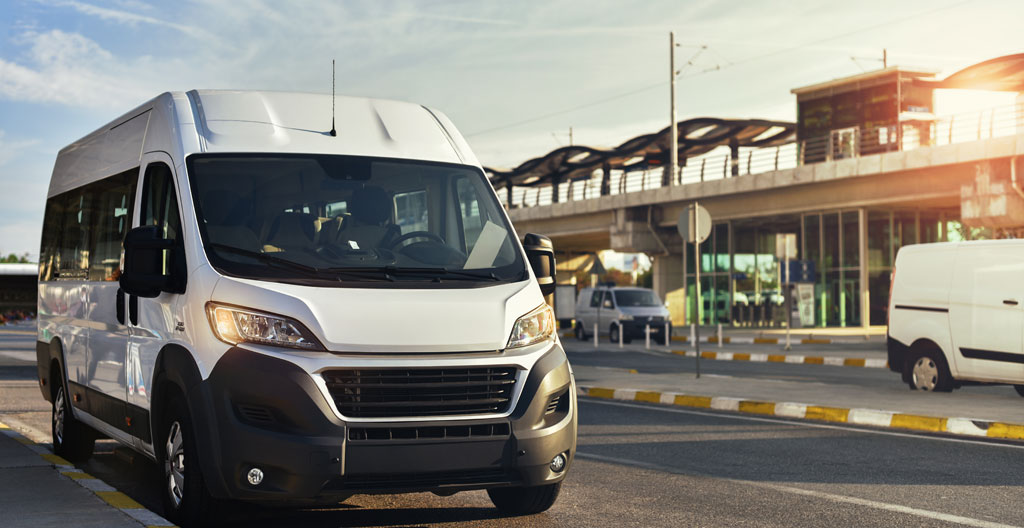
Booking a minibus for group travel typically begins with a deceptively simple question: how many passengers? A family of eight books a 9-seater expecting comfort, only to discover at pickup that filling every seat leaves almost no luggage space. The suitcases, pushchairs, and sports equipment that seemed manageable at home suddenly demand compromises nobody anticipated.
Boot volume measurements, transmission type, climate control zones, and airport delivery logistics separate satisfactory bookings from regrettable ones. The specifications that genuinely impact comfort rarely feature prominently in marketing materials.
Your group transport priorities in 30 seconds
- Advertised seating capacity misleads when luggage volume remains unspecified
- Families with substantial luggage benefit from sacrificing one seat for cargo space
- Automatic transmission and climate control features reduce driver fatigue significantly
- Airport delivery services eliminate coordination anxiety at Paris-Charles de Gaulle
Why standard passenger counts mislead group planners
An extended family books a 9-seater minibus for eight passengers, creating false confidence. At collection, three large suitcases, two child car seats, a pushchair, and beach equipment compete for a 450–litre boot designed for perhaps two overnight bags when all nine seats are occupied.
Thompson R., Vehicle Rental Fleet AnalystGroups consistently underestimate luggage volume requirements when selecting vehicles based purely on passenger numbers. The most frequent modification request we observe involves customers attempting to upgrade to larger models after discovering their initial booking cannot physically accommodate both people and belongings comfortably.
Market evidence consistently shows that passenger capacity advertised as the primary specification creates planning errors. A 9-seater configuration physically accommodates nine people, yet boot space remaining after installing the third seating row typically measures 400-550 litres — roughly three medium suitcases stacked flat.
Removing the rearmost seats can triple usable cargo volume to 1,200-1,500 litres. The most commonly overlooked factor is this inverse relationship between maximum occupancy and practical storage. Rental descriptions rarely clarify which measurement applies.
Professional logistics remain the cornerstone of successful group movements, particularly when navigating high-traffic transport hubs. Opting for a specialist service for minibus hire at Paris-Charles de Gaulle allows travellers to bypass the complexities of traditional rental counters by receiving the vehicle directly at the terminal. This streamlined approach eliminates the logistical friction often encountered upon arrival, ensuring the vehicle is ready for immediate departure with all technical configurations pre-verified by specialists, which significantly reduces the initial stress of coordinating a large group.
Matching vehicle configuration to your group profile
Selecting appropriate minibus specifications requires matching vehicle features to group priorities rather than simply maximising passenger capacity.
-
If your group includes children with substantial luggage and equipment:
Prioritise 9-seater models with enhanced boot capacity or roof rack compatibility, planning to operate with 7-8 passengers to preserve cargo space.
-
If your group values journey comfort and productivity over economy:
Select premium 8-seater automatic transmission models featuring dual-zone climate control, individual USB charging points, and enhanced noise insulation.
-
If your group prioritises cost efficiency and splits expenses:
Choose standard 9-seater manual transmission configurations, accepting reduced individual space in exchange for superior fuel economy and lower daily rates.
Families travelling with children and substantial luggage
Families transporting child safety seats, pushchairs, and holiday equipment benefit from prioritising cargo volume over maximum occupancy. A 9-seater operated with seven or eight passengers delivers substantially more boot space. Roof rack compatibility becomes the specification that matters most, adding 300-400 litres of weatherproof storage for bulky items.
Corporate groups prioritising journey comfort over economy
Business travellers using minibus transport for airport transfers or conference attendance gain productivity advantages from premium 8-seater configurations. Automatic transmission significantly reduces driver fatigue during urban navigation, particularly valuable when journey responsibilities rotate among colleagues unfamiliar with manual gearboxes. Dual-zone climate control prevents rear-passenger discomfort during extended journeys, whilst individual USB charging points enable laptop and mobile device operation throughout transit.
Budget-conscious friend groups maximising cost efficiency
Friend groups sharing travel costs for sporting events or festivals can accept reduced individual comfort when financial savings become the priority. Standard 9-seater manual transmission minibuses offer the lowest daily rental rates and superior fuel economy, with consumption figures approximately 15-20% better than equivalent automatic models. When seven to nine friends split costs equally, the per-person savings compared to premium configurations often exceed 30–50 £ for weekend bookings.
Specifications that separate adequate from regrettable choices
Beyond passenger count and transmission type, four technical specifications determine whether a minibus meets group expectations. Boot volume measured in litres provides the only reliable comparison metric, yet rental descriptions frequently omit this critical figure. Entry-level 9-seater models typically offer 450-550 litres with all seats installed, whilst premium 8-seater configurations deliver 650-800 litres — a difference representing two additional large suitcases.
Transmission choice encompasses fuel consumption implications. Manual gearboxes generally achieve 6.5-7.5 litres per 100 kilometres, whilst automatic equivalents consume 7.8-8.8 litres per 100 kilometres. For a 1,000-kilometre round trip, this differential translates to approximately 20–25 £ at current fuel prices.
| Specification | Economy Configuration | Premium Configuration | Impact on Experience |
|---|---|---|---|
| Boot volume (seats up) | 450-550 litres | 650-800 litres | 250L difference = 2 large suitcases |
| Transmission type | Manual 6-speed | Automatic 8-speed | Fatigue reduction, fuel +15-20% |
| Climate control zones | Single-zone manual | Dual-zone automatic | Rear passenger comfort on journeys >2 hours |
| Fuel consumption | 6.5-7.5 L/100km | 7.8-8.8 L/100km | £20-25 difference per 1,000km |
Climate control configuration affects comfort more significantly than most groups anticipate. Single-zone systems require the driver to adjust temperature based on feedback from rear passengers. Dual-zone automatic systems allow front and rear sections to maintain different temperatures, accommodating varying preferences without compromise.
Terminal-side delivery represents the final specification that distinguishes professional vehicle providers from standard operators. Utilizing direct handover services eliminates the coordination anxiety typically associated with navigating off-site depots. The time saved — often exceeding an hour — proves invaluable for groups operating on tight schedules or arriving after long-haul flights, ensuring a seamless transition from the terminal to the road.
Questions groups ask before confirming bookings
Practical booking concerns consistently emerge across group types, revealing common anxieties about documentation, insurance coverage, and operational logistics.
Does a UK driving licence remain valid for minibus rental in France?
UK driving licences issued before 2021 remain valid throughout France without requiring international permits, as confirmed by official Service-Public.fr guidance. Licences issued after 2021 remain valid for one year from establishing French residence, sufficient for tourist rentals. Rental companies require the photocard licence showing categories B and B1.
What insurance coverage and deposit amounts should groups expect?
Standard rental agreements include mandatory third-party liability insurance. Collision damage waiver and theft protection typically require optional purchase, reducing excess liability from €1,500-2,000 to €300-500. Security deposits range from €800-1,200, held via credit card authorisation and released 7-14 days post-return.
How flexible are modification and cancellation policies for group bookings?
Standard policies allow free amendments up to 48 hours before collection, whilst budget operators may charge €25-50 modification fees. Cancellation terms typically offer full refunds for cancellations made 7+ days in advance, 50% refunds for 48-hour notice, and no refunds for same-day cancellations.
Are minibuses provided with full fuel tanks requiring full return?
Full-to-full fuel policies dominate the minibus rental market, providing vehicles with full tanks and requiring equivalent return levels. Pre-purchase fuel options exist but typically charge premium rates of €1.80-2.00 per litre compared to pump prices of €1.60-1.75. Returning vehicles without refuelling incurs service charges of €35-50 plus inflated fuel rates.
How do groups coordinate airport pickup timing with flight arrival uncertainties?
Airport delivery services typically monitor flight arrival data, adjusting meeting times automatically for delays up to 60-90 minutes without penalty. Groups should provide accurate flight numbers during booking. For delays exceeding monitoring windows, most providers require telephone notification to reschedule delivery, sometimes charging €40-60 standby fees.
Understanding the details of rental agreements prevents surprise charges and clarifies responsibilities regarding damage reporting, mileage allowances, and additional driver authorisation. Groups should review terms covering cross-border travel if planning to visit Belgium, Germany, or Switzerland, as geographical restrictions sometimes apply to minibus categories.
The specifications that genuinely separate satisfactory minibus bookings from regrettable ones rarely dominate rental marketing. Boot volume measurements, transmission implications for driver fatigue, and climate control configurations matter more than decorative features. Groups that prioritise these functional criteria according to their specific needs arrive at vehicle selections that enhance rather than complicate their journeys.